
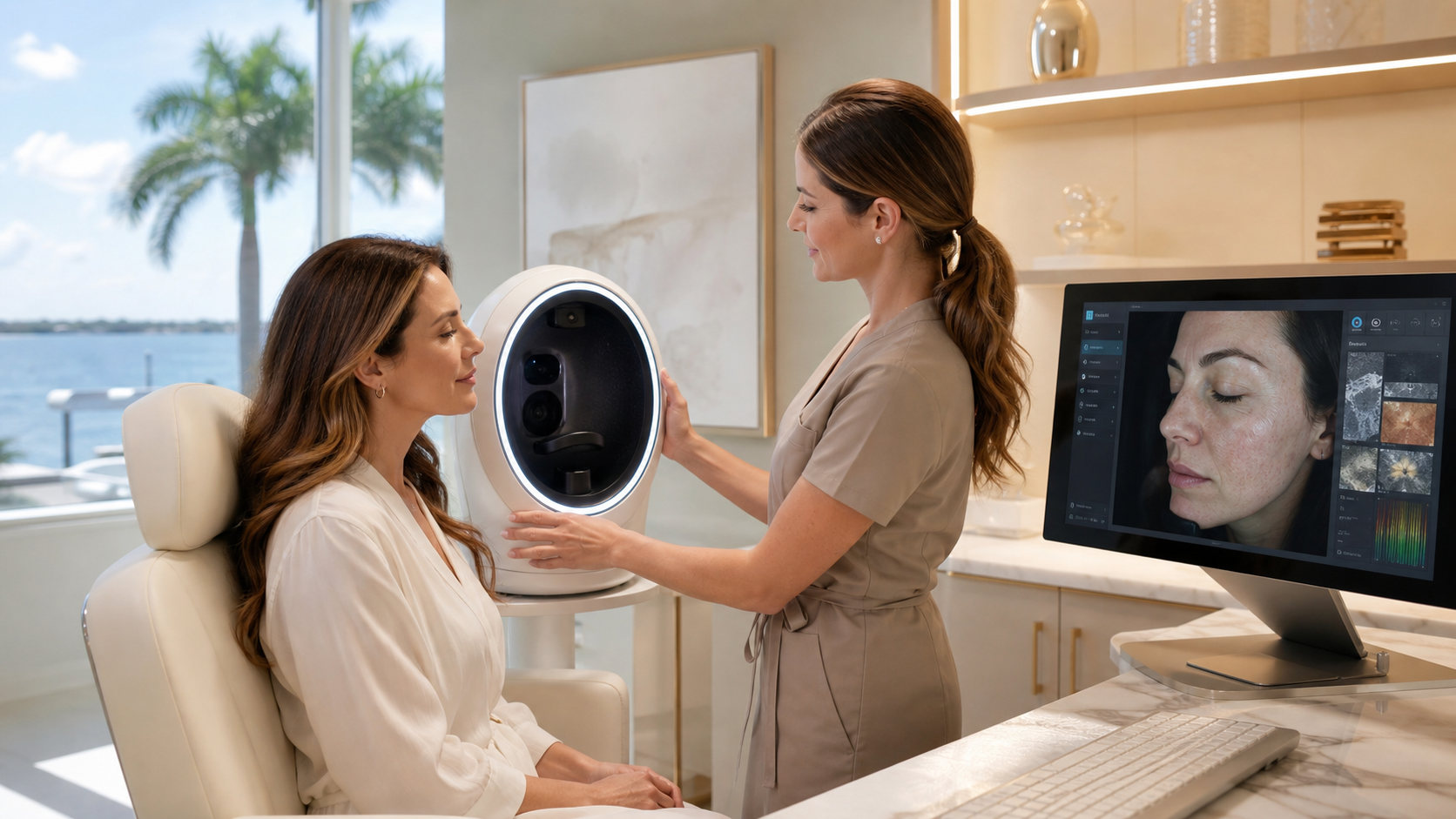
A medical facial is a professionally selected facial treatment built around a person's skin condition, concerns, tolerance, and goals. At Harmony Med Spa in Sarasota, a Spectra Skin Analysis can add objective visual information to the consultation so the treatment conversation starts with what the skin appears to need rather than a one-size-fits-all menu choice.
- What is a medical facial?
- Medical facial vs. traditional spa facial
- What can a Spectra Skin Analysis add to the consultation?
- How skin analysis can personalize a facial plan
- Treatments that may be discussed after an analysis
- What to expect at a skin analysis appointment
- Realistic expectations make the plan more useful
- Choosing a medical facial in Sarasota
- Frequently Asked Questions
The phrase medical facial does not describe one universal procedure. It generally refers to a facial performed in a medical-aesthetics environment where the provider can select professional products, exfoliation methods, devices, or add-on services according to an individual assessment. The appointment may still feel relaxing, but its main purpose is to address a defined skincare objective through a structured plan.
That objective might be improved hydration, a brighter-looking complexion, support for congested skin, smoother-looking texture, or a plan for visible discoloration and signs of aging. The right facial depends on the person's current skin, recent procedures, home products, medications, sensitivity, sun exposure, and expectations. A consultation matters because two people asking for a glow may need very different approaches.
A traditional spa facial often emphasizes cleansing, massage, relaxation, and general maintenance. A medical facial usually places more emphasis on assessment, treatment selection, measurable concerns, professional-grade options, and coordination with a broader skincare plan. Neither label automatically makes a facial better. The useful question is whether the service is appropriate for your skin and whether the provider explains the goal, expected experience, limitations, and aftercare.
- Traditional spa facial: often relaxation and maintenance focused
- Medical facial: commonly goal and assessment focused
- Both: should include appropriate cleansing, product selection, hygiene, and individualized care
- Best choice: the option that matches your skin, comfort, schedule, and realistic goals
A professional imaging system captures standardized views of the face and presents visual information that can support the provider's assessment. Depending on the system settings and images collected, the consultation may include discussion of visible texture, pores, surface spots, uneven-looking tone, redness, oil-related congestion, fine lines, or other observable features. The scan is a planning aid, not a medical diagnosis and not a promise that a specific treatment will produce a particular result.
The value is consistency. Lighting, mirrors, and phone photos can make skin look different from one day to the next. Standardized images give the provider and patient a shared reference point. That can make it easier to prioritize concerns, explain why one service may be more suitable than another, and avoid choosing a treatment simply because it is popular online.
Personalization begins by combining the images with a real conversation. Your provider should ask what bothers you, what you have tried, how your skin reacts, what products you use, and whether you are preparing for an event or maintaining long-term skin health. The most visible issue on a scan may not be the issue you want to treat first. Your priorities, budget, downtime tolerance, and medical history remain part of the decision.
- Review the skin images and the concerns you notice at home.
- Discuss recent treatments, prescriptions, allergies, sensitivities, and daily products.
- Choose an appropriate starting service rather than attempting every concern at once.
- Create a practical home-care and sun-protection routine that supports the in-office plan.
- Reassess over time and adjust only when the skin and goals justify a change.
The recommendation may be a customized facial, Glo2Facial, peel, professional skincare routine, or a consultation for a device-based service. Sometimes the most appropriate first step is a gentle service and consistent home care. More aggressive does not automatically mean more effective, and a scan should never be used to pressure someone into unnecessary treatment. Harmony's role is to explain reasonable options and help the patient choose an approach that fits.
Arrive with clean skin when possible, or be prepared to remove makeup before imaging. Bring a list or photos of products you use regularly, especially retinoids, exfoliating acids, acne products, and prescriptions. Tell the provider about recent sun exposure, irritation, cold sores, pregnancy, allergies, and procedures performed elsewhere. After the images are reviewed, the provider can explain observations, answer questions, and outline possible next steps. You are not required to purchase a treatment simply because you completed an analysis.
Skin changes over time and responds to hormones, weather, stress, medication, sun exposure, products, and consistency. A facial can support appearance and maintenance, but it cannot diagnose every skin condition or guarantee permanent correction. New, changing, bleeding, painful, or otherwise concerning spots should be evaluated by an appropriate medical professional. The best skincare plan is understandable, sustainable, and adjusted when your skin changes.
Sarasota's sun exposure and active lifestyle make daily sunscreen and realistic maintenance especially important. When comparing a medical facial or skin spa near you, ask who performs the service, how your skin is assessed, what products or devices may be used, what downtime is expected, and what the total plan may cost. A trustworthy consultation should make the choices clearer, not more confusing.
1. What is considered a medical facial?
A medical facial is a professionally selected facial in a medical-aesthetics setting that is planned around the person's skin, concerns, history, and goals. The exact steps and products vary because medical facial is a category, not one standardized procedure.
2. How is a medical facial different from a regular spa facial?
A regular spa facial often emphasizes relaxation and general maintenance, while a medical facial commonly emphasizes assessment, targeted treatment selection, and coordination with a broader skincare plan. The right choice depends on the individual rather than the label alone.
3. What does a Spectra Skin Analysis show?
The system provides standardized facial images that may support discussion of observable features such as texture, pores, surface spots, uneven-looking tone, redness, congestion, or fine lines. It is a planning tool and does not replace medical diagnosis.
4. Does a Spectra Skin Analysis hurt?
The imaging portion is noninvasive. You are positioned for photographs while the system captures facial images. No treatment is performed simply by completing the scan.
5. Should I wear makeup to my skin analysis appointment?
Clean skin is generally best for consistent imaging. If you arrive with makeup, the team may ask you to remove it. Ask Harmony for appointment-specific preparation instructions.
6. Do I have to purchase a facial after the analysis?
No. The purpose of the consultation is to review your concerns and discuss reasonable options. You can consider the information before deciding whether to schedule a treatment.
If you want a clearer starting point for facials or skin treatments in Sarasota, schedule a Spectra Skin Analysis and consultation with Harmony Med Spa. Current promotions can change, so confirm today's pricing and credit terms when you book.
Book a skin analysis with Harmony Med Spa in Sarasota.